
Is a Risk.
We Help You
Control It.
In biopharmaceutical manufacturing, sampling sits at the intersection of process integrity, data quality, and regulatory compliance. Getting it wrong does not just affect the sample — it can affect the batch, the data, and ultimately the patient.
SaniSure has mapped the full spectrum of sampling challenges across biopharmaceutical manufacturing and built a closed, single-use, configurable portfolio designed to address each one.
Sampling in Biopharmaceutical Manufacturing Is Never Routine
Every sample collection is a controlled intervention into a live process. Whether you are drawing from a production bioreactor mid-run, monitoring protein purification, pulling retention samples at formulation and fill, or monitoring WFI for routine QC, the stakes are the same. You need representative, uncontaminated samples that hold up to regulatory scrutiny, without introducing risk to the process or the product.
The challenge is that no two sampling scenarios are identical. The right approach depends on how frequently you need to sample, how much material you can afford to draw, what stage of the process you are working in, and what your data needs to prove.
Getting sampling right means matching the format, the connection type, the container, and the closure to the specific demands of each process step — within a closed, single-use system that protects both the sample and the process at every stage.

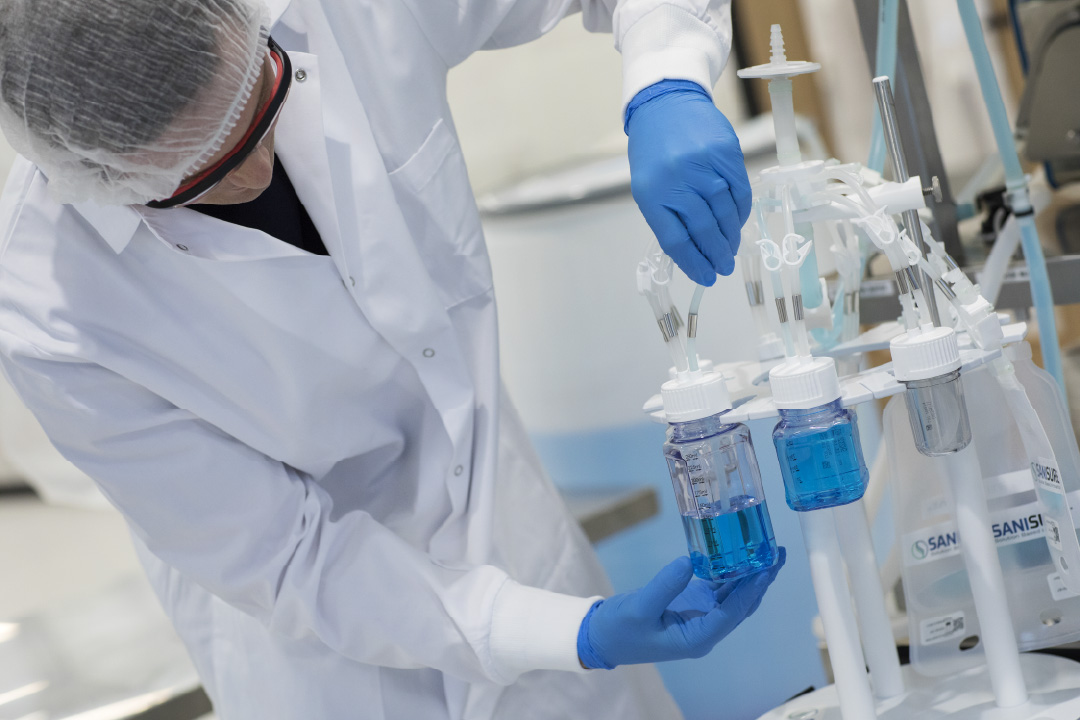
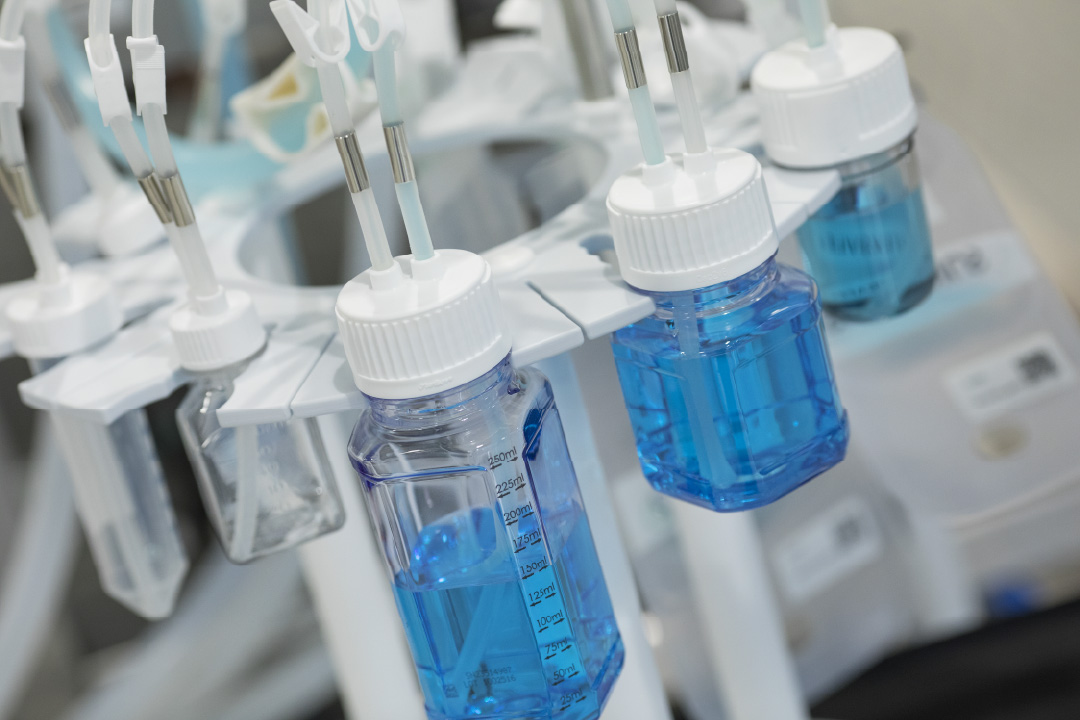
Find Your Scenario
Every sampling scenario has its own demands. Map your situation below and see how SaniSure addresses it.
| Sampling Challenge | Process Stage | Frequency | Sample Volume | Primary Risk | SaniSure Solution |
|---|---|---|---|---|---|
| Collecting multiple samples simultaneously for a range of analytical tests | Harvested Bulk, Clarification Pool, pooled chromatography fractions, UF/DF, final formulation and fill | Low, single timepoint | High, multiple containers required | Data comparability, contamination, sterility | One2Sample |
| Infrequent collection of single or few high-compliance samples | Media and buffer prep, seed train, harvest, downstream purification, drug substance and product | Very low | Variable, precisely defined | Contamination risk, regulatory documentation, validation | Container Sampling Assemblies |
| Frequent sampling over the course of a long-duration process | Production Bioreactors, continuous downstream processes | High, repeated intervals | Low to medium per draw | Sterility over time, operator consistency, process disruption | Stopcock Manifolds |
| Small volume samples collected infrequently for real-time analysis | Low-bioburden process steps, in-process physiochemical QC | Variable, unscheduled | Very low (1–2 mL) | Process integrity, sterility at point of access | Sterile Syringe Assemblies |
| Routine water for injection quality monitoring | WFI drops throughout the facility | Routine, scheduled | Low | Contamination, gasket misalignment, labor cost | aSURE WFI Samplers |
When One Sample Needs to Monitor Multiple
Product and Process Attributes at the Same Time
Closed, consistent, multi-destination sampling. Designed to support sterility, reproducibility, and efficient analysis from a single sample connection.
In biopharmaceutical manufacturing, certain samples are process-critical, supporting in-process monitoring, CQA assessment, or lot release decisions. These samples are often irreplaceable, time-sensitive, and subject to stringent sterility and data-integrity requirements. The challenge is not merely to obtain a representative sample, but to capture multiple analytically suitable aliquots simultaneously from a single aseptic access point without compromising process or sample integrity.
| Common Approach | The Problem It Creates |
|---|---|
| Sequential sampling from the same port | Draws do not reflect the same true timepoint, undermining data comparability across assays |
| Splitting a single sample across multiple containers | Adds handling steps, affects analyte stability, and introduces variability between fractions |
| Multiple process connections per sampling event | Each additional entry point is a contamination and sterility risk that compounds with every run |
| Manual technique variation across operators or shifts | Variability that accumulates across runs and is difficult to defend in audits or regulatory submissions |
- Harvested Bulk or Clarification Pools — contamination checks and safety profile along with product quality and impurity characterization
- Chromatography — load, elution, and impurity fractions compared across the same run
- UF/DF diafiltration — cycle checkpoint samples that inform real-time process decisions without disrupting the run
- Formulation and fill — simultaneous lot release and retention sampling under full GMP traceability
- Does it access the process through a single, sterile connection point regardless of how many assays are required?
- Does it fill all sample containers simultaneously so every draw reflects the same true timepoint?
- Does it maintain a fully closed, single-use system from process access through sample container fill?
- Does it support up to 10 sample containers with flexibility to match each container to its assay?
- Does it simplify handling and documentation so assay complexity does not translate to bench complexity?
Custom & Standard
The industry’s first 10-hub aseptic sampling manifold enables time-matched sampling across all analytics, filled simultaneously from a single sterile port. Its single-use, closed-system design maintains process and sample integrity across every draw, while the ergonomic manifold simplifies handling and saves time at the bench.

When Every Sample Has to Be Perfect the First Time
to Move On to the Next Process Step
Managing contamination risk, validation requirements, and regulatory documentation when there is no opportunity to repeat the collection.
Some samples carry the full weight of a batch decision. A clarification harvest sample, a drug substance lot release draw, a buffer preparation QC pull. These collections seem routine but could stall production. They are often irreplaceable, heavily documented, and subject to the kind of regulatory scrutiny that makes every handling decision consequential. The pressure is not just getting a clean sample. It is proving you got a clean sample.
| Common Approach | The Problem It Creates |
|---|---|
| Open container sampling at critical process steps | Every open transfer is a contamination risk with no closed-system documentation to support it |
| Generic sampling assemblies not matched to the assay | Container material, volume, and closure type affect analyte stability and can compromise results before analysis begins |
| Assembling components at the point of use | Increases handling steps, introduces variability, and adds documentation burden that is difficult to defend in audits |
| Reusing or resterilizing stainless steel components | Cleaning validation requirements add cost and complexity, and residual contamination risk is never fully eliminated |
- Media and buffer preparation — pH, conductivity, endotoxin, and bioburden QC at critical preparation steps
- Clarification and harvest — turbidity, bioburden, HCP, and DNA at the most sensitive stage of downstream processing
- Downstream purification — protein yield, impurities, and retention samples across chromatography and filtration
- Drug substance formulation and fill — ID, concentration, bioburden, and impurity confirmation
- Drug product formulation and fill — ID, potency, purity, and retention sampling under full GMP traceability
- Does it provide a fully closed, single-use path from process connection through sample container without any open transfers?
- Is it pre-configured with the right container, closure, and connection type for the specific assay it serves?
- Does it eliminate component assembly at the point of use to remove variability from the collection process?
- Does it meet the documentation requirements of GMP sampling without adding steps to the workflow?
- Does it eliminate cleaning validation burden by using a single-use design?
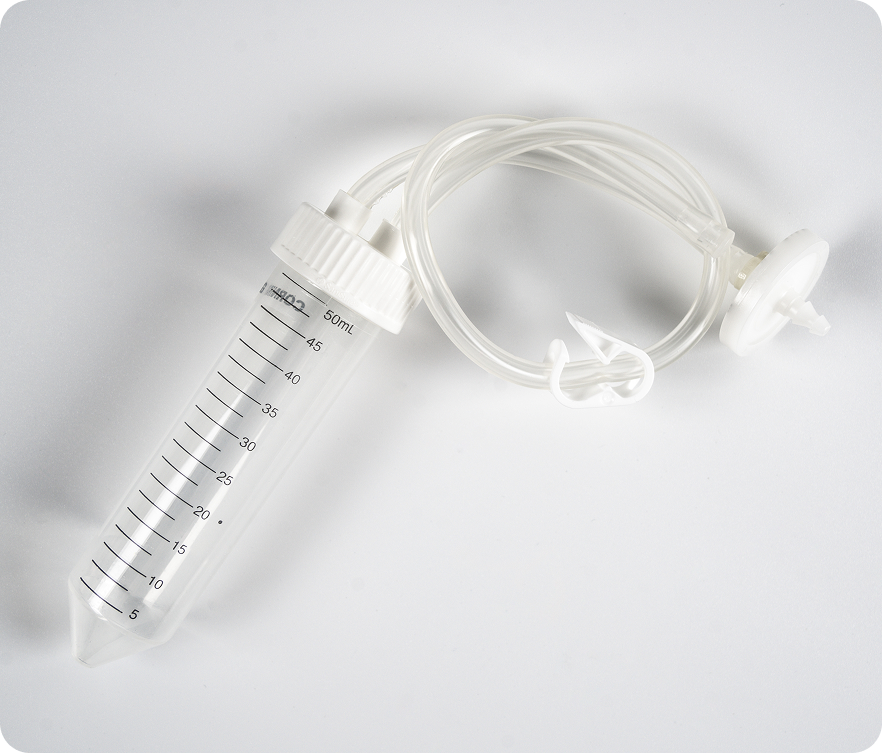
Assemblies
Each assembly is defined by the specific demands of the collection it serves. Process connection type, container material, volume, and closure are selected together to ensure the sample arrives at the assay in exactly the condition it left the process. No open transfers, no assembly at point of use, no cleaning validation burden.
How Do You Sample at Multiple Timepoints
with a Single Connection Without Putting It at Risk?
Maintaining sterility, consistency, and process integrity across repeated collections from a single connection point without dead volume.
Long-duration bioprocessing runs require representative samples at specific timepoints. Perfusion bioreactors, continuous downstream processes, and extended culture monitoring require frequent, repeated access to the process over hours or days. Each collection is an opportunity to introduce contamination, disrupt flow, or introduce variability that accumulates across the run. The more frequently you sample, the more those risks compound.
| Common Approach | The Problem It Creates |
|---|---|
| Repeated disconnection and reconnection at the sample port | Each new connection is a sterility risk and a potential source of process disruption |
| Manual flush procedures before each draw | Operator-dependent technique introduces variability that is difficult to detect and harder to document |
| Sequential sampling without a dedicated manifold | No standardization of flush volume or draw sequence, making sample-to-sample comparability unreliable |
| Multiple sampling ports along the same process line | Increases connection complexity, adds potential leak points, and complicates cleaning and maintenance |
- Production Bioreactors — physiochemical panels and protein panels must reflect the precise timepoint across all analytics
- Continuous downstream processes — process conditions, yield, and impurity samples drawn repeatedly without disrupting flow
- Extended culture monitoring — any process where technique consistency and sterility over time are the primary quality concern
- Does it maintain a single, protected process connection across all draws, eliminating repeated reconnection risk?
- Does it standardize the flush and draw procedure so operator technique does not affect sample quality?
- Does it minimize process disruption so each collection does not create downtime or risk to the run?
- Does it support the full range of sample containers your assays require without a new assembly for each draw?
- Does it provide a documented, repeatable process that supports GMP traceability across every collection?
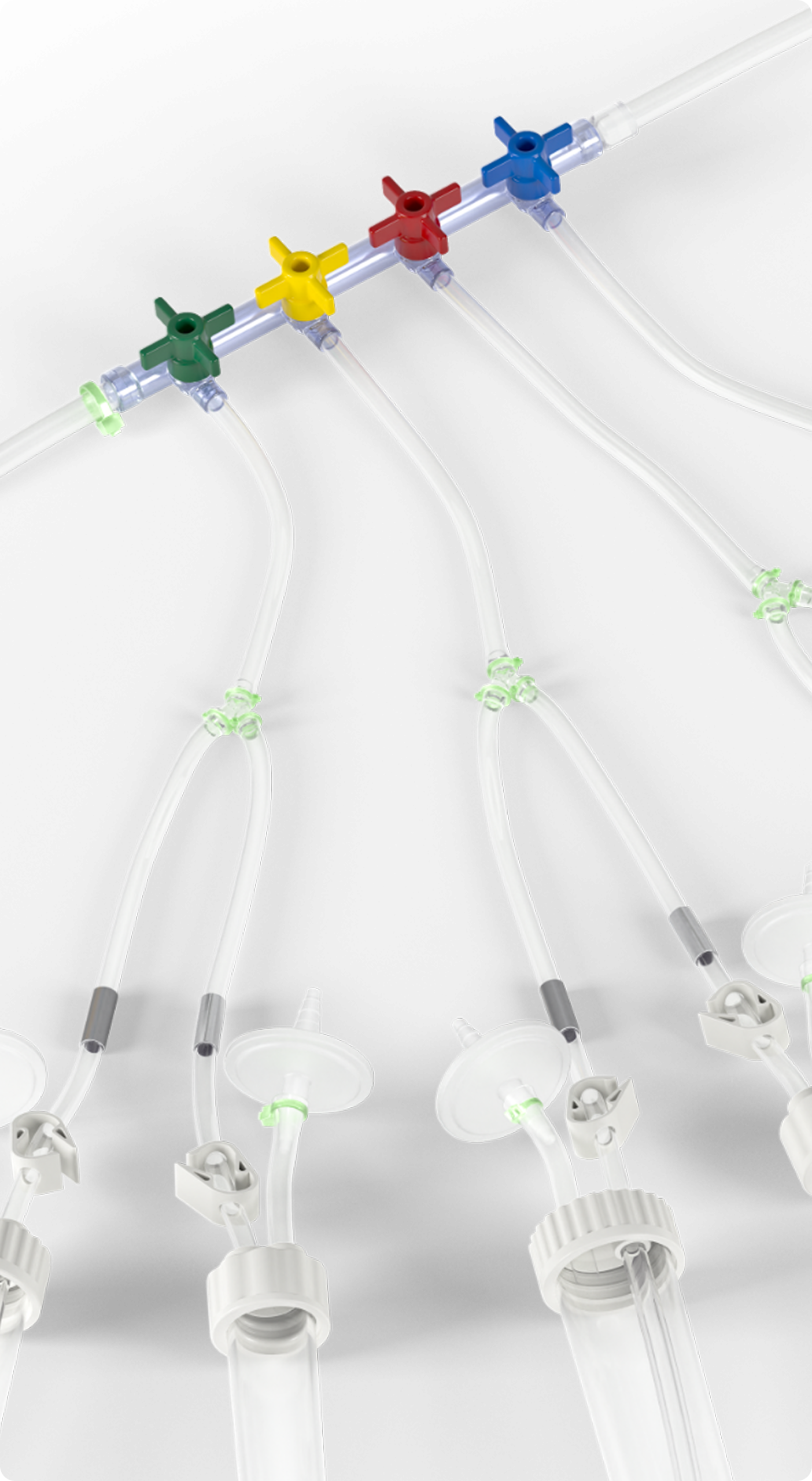
Manifolds
Multi-port valve blocks allow operators to open and close sampling ports rapidly for controlled, sterile transfer of material at repeated intervals. A dedicated line flush before each draw ensures representative samples every time, regardless of operator. By eliminating repeated reconnections and standardizing the draw procedure, Stopcock Manifolds reduce contamination risk, improve sample consistency, and keep your process running without interruption.
How Do You Sample a High-Value Process
When You Only Need a Few Milliliters?
Flexible, low-volume access for real-time process monitoring without introducing risk at the point of collection.
Not every sampling scenario requires a manifold, a multi-port valve block, or a preconfigured assembly. In many cases, a syringe sampling assembly provides a simple, convenient way to collect small volumes at unpredictable times from space-constrained access points, without unnecessary complexity.
| Common Approach | The Problem It Creates |
|---|---|
| Needle-based access at unprotected ports | Introduces contamination risk at every draw and is unsuitable for GMP environments |
| Oversized sampling assemblies for low-volume draws | Adds unnecessary dead volume, increases waste of high-value product, and complicates access in constrained spaces |
| Manual syringe draws without a standardized access site | Inconsistent technique, contamination exposure, and limited ability to document sterility controls |
| High-frequency manifolds used for occasional low-volume pulls | Solution complexity far exceeds the requirement, adding cost and handling burden without benefit |
- Low-bioburden process steps where seed train monitoring requires small volume and downstream filtration mitigates microbial risk
- At-line process monitoring where samples are pulled on demand for immediate physiochemical analysis
- Space-constrained access points where larger assemblies are impractical or incompatible with the process line
- In-process physiochemical QC where real-time data is needed without drawing significant volume
- Does it provide a standardized, needleless access point that maintains sterility across repeated or unscheduled draws?
- Does it keep the external container footprint at zero so high-value product is not wasted?
- Does it allow the operator to control draw volume precisely without requiring a pre-defined container size?
- Does it work within the physical constraints of the access point without modifying the process line?
- Does it support GMP documentation of sterility controls for low-frequency or unscheduled collections?
Assemblies
A convenient syringe access point using a needleless injection site allows operators to draw precisely the volume they need, when they need it, without disrupting the process or exposing it to contamination. The zero external container footprint means nothing outside the process line holds product between draws.

Routine Does Not Mean Low Risk.
How Are You Controlling Contamination in Your WFI Sampling Process?
Eliminating gasket misalignment, cleaning burden, and contamination risk from your most frequently repeated sampling task.
WFI sampling is one of the most routine tasks in a biopharmaceutical facility. It is also one of the most frequently underestimated sources of process risk. Because it happens so often and the individual sample seems low-stakes, the accumulated risk of repeated manual connections, gasket handling, and stainless steel reuse rarely gets the attention it deserves. Until something goes wrong.
| Common Approach | The Problem It Creates |
|---|---|
| Reusable stainless steel WFI samplers | Cleaning validation requirements add significant cost and complexity, and residual contamination risk is never fully eliminated |
| Separate gasket handling at point of connection | Gasket misalignment or loss at the WFI drop introduces contamination risk and can invalidate the sample |
| Autoclave sterilization before each use | Adds preparation time, labor cost, and energy overhead to a task that should be simple and repeatable |
| Generic sampling containers not designed for WFI drops | Poor fit at the connection point increases contamination risk and makes consistent technique difficult to achieve |
- Sterile water for injection sampling at WFI drops for conformance to TOC, conductivity, endotoxin, and microbial limits
- High-volume QC environments where stainless steel sampler overhead creates meaningful operational cost
- Facilities transitioning to single-use where WFI sampling is one of the last remaining reusable touchpoints
- Quality operations where documentation simplicity and procedural consistency are priorities across a large technician team
- Does it eliminate the need for cleaning validation by using a ready-to-use, single-use design?
- Does it prevent gasket misalignment or loss by integrating the gasket permanently into the assembly?
- Does it reduce labor cost by removing autoclave preparation and kitting from the sampling workflow?
- Does it connect reliably and consistently to the WFI drop regardless of operator technique?
- Does it meet documentation requirements for TOC, conductivity, endotoxin, and microbial limit testing?
Samplers
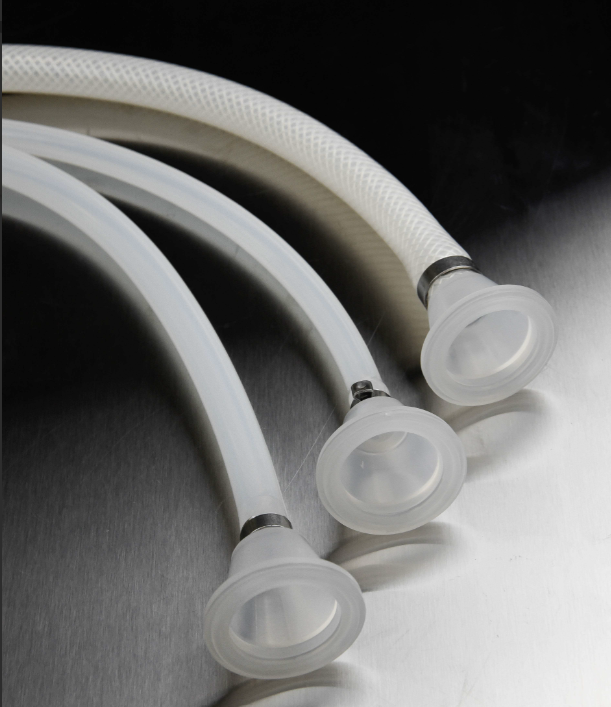
aSURE’s patented design fuses the Cellgyn and Pharmaline I gasket directly to a sanitary polypropylene fitting, forming a true monolithic assembly that eliminates gasket misalignment or loss. Ready-to-use and sterile out of the package, aSURE removes autoclave preparation, cleaning validation, and kitting from the sampling workflow entirely.
Every Sampling Challenge
Is Different. Tell Us About Yours.
We have mapped the five most common sampling scenarios in biopharmaceutical manufacturing, but we know your process may not fit neatly into any one of them. Our team works through complex, custom sampling challenges every day. If you are dealing with a scenario that requires a different approach, a combination of solutions, or something we have not covered here, we want to hear about it.
Contact Our Sampling Team