Closed-System Automation: Solving Challenges in Vaccine and Viral Vector Manufacturing
Modernize vaccine and viral vector manufacturing with automated roller bottle processing that reduces contamination risk while meeting FDA and EU regulatory requirements.
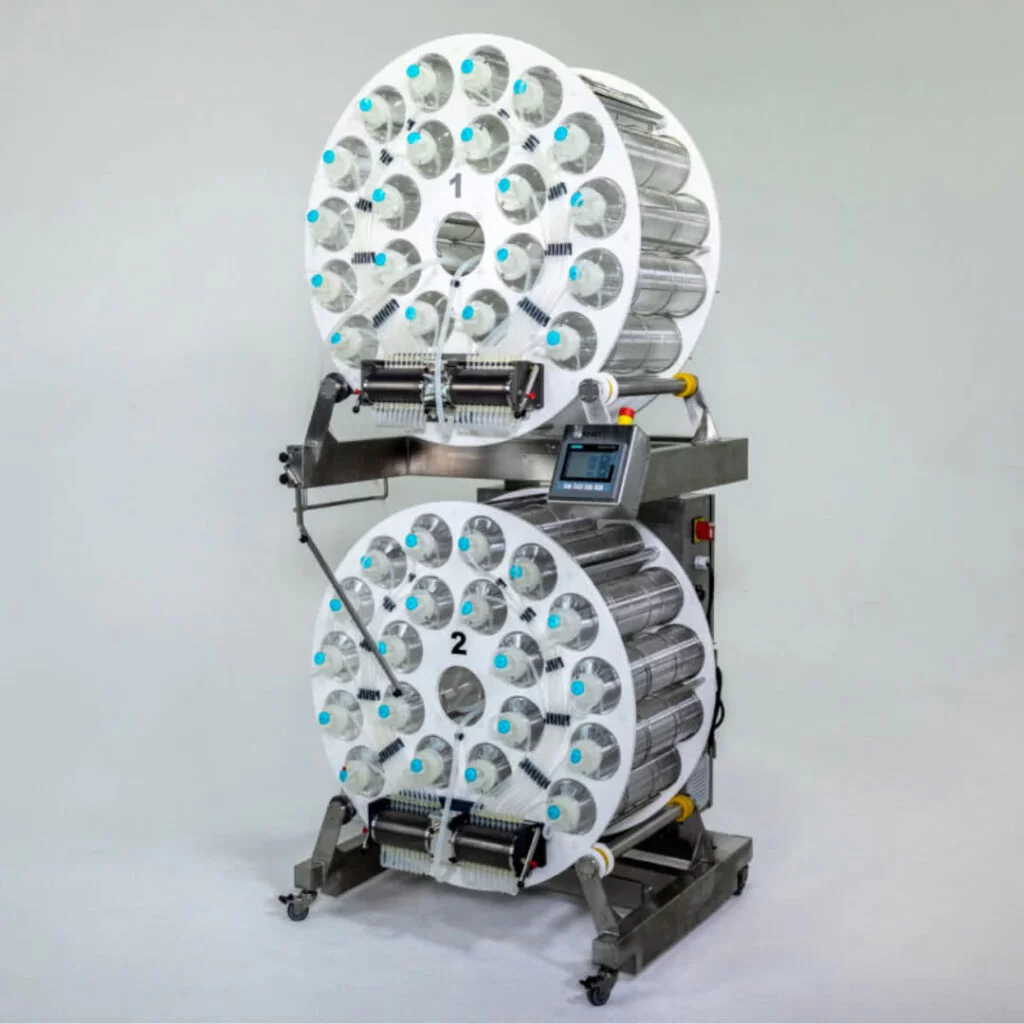
The Challenge of Adherent Cell Culture
Vaccine and viral vector manufacturers rely heavily on adherent cell culture to produce critical biologics, from rabies and polio vaccines to viral vectors used in advanced therapies. Despite the rise of bioreactor technology, roller bottle processes remain validated and widely used in legacy and mid-scale operations — particularly where revalidating new systems would be prohibitively costly or time-consuming.
However, this reliance on manual roller bottle workflows is increasingly misaligned with modern expectations for speed, scalability, and compliance. Manufacturers must balance accelerated timelines with strict regulatory oversight while avoiding costly contamination events — a challenge magnified by the complexity of global supply chains and variable demand for seasonal or outbreak-driven vaccines.
Intensifying Regulatory Pressures
Global regulatory bodies have fundamentally shifted expectations for aseptic manufacturing, making manual roller bottle processes increasingly difficult to justify:
- FDA 21 CFR Part 211 requires aseptic manufacturing with minimal operator intervention, reproducibility, and comprehensive environmental monitoring1.
- EU GMP Annex 1 (2023 revision) prioritizes closed-system processing and mandates robust Contamination Control Strategies (CCS) and enhanced process simulations2.
- ICH Q7 guidelines emphasize contamination prevention, detailed process validation, and quality management systems for API manufacturing3.
Contamination Risks and Operational Impact
Each manual touchpoint in roller bottle processing — from inoculation to harvest — increases contamination risk. Viral contamination events can cost manufacturers millions of dollars, halt production for months, and disrupt patient access to therapies4. For CDMOs (Contract Development and Manufacturing Organizations) supporting multiple clients, cross-contamination between projects is an additional risk that complicates audit readiness and client confidence.
Beyond contamination, manual roller bottle methods require extensive documentation, create prolonged cycle times for media exchange and harvest, and suffer from operator variability. These inefficiencies slow production and strain resources in high-demand environments.
The Scale Challenge: More Than Just Capacity
Legacy facilities face another critical bottleneck: limited cleanroom space and capital constraints. Scaling manual roller bottle processes often means scaling labor and facility footprint proportionally — an unsustainable model for manufacturers under pressure to increase throughput quickly.
While some competitors advocate full bioreactor transitions, this approach demands major infrastructure investment, lengthy revalidation, and often costly and time-consuming product re-registration. For many organizations with validated roller bottle processes, the challenge is finding a bridge solution — one that modernizes compliance and efficiency without discarding existing platforms.
CDMO-Specific Challenges
CDMOs confront these challenges in a multi-client context, where each project brings unique regulatory requirements, audits, and timelines. Rapid changeovers between products amplify contamination risks and documentation burdens. Operational flexibility is crucial: CDMOs must standardize core processes while adapting to diverse client specifications — a balancing act difficult to achieve with manual roller bottle workflows.
Why Manual Roller Bottle Methods Fall Short
Manual roller bottle processes present five critical pain points for today’s biologics landscape:
- High contamination risk: Open handling creates environmental exposure and operator-dependent variability.
- Labor-intensive workflows: Sequential bottle handling consumes significant operator hours and creates ergonomic strain.
- Inconsistent documentation: Manual recordkeeping complicates audits and slows regulatory submissions.
- Scalability limitations: Scaling production requires proportional increases in labor and cleanroom space.
- Audit vulnerability: Variability between operators and shifts undermines compliance with modern GMP standards
The Case for Closed-System Automation
Closed-system automation addresses these challenges by integrating aseptic processes into a unified, reproducible workflow:
- Contamination control: Eliminates open handling, aligning with Annex 1 and FDA aseptic requirements.
- Standardization & documentation: Automated records reduce variability and ease regulatory audits.
- Scalable efficiency: Parallel processing supports higher throughput in the same cleanroom footprint.
- Labor savings: Reduces manual interventions by up to 95%, freeing skilled staff for higher-value tasks.
- Multi-product flexibility: Simplifies rapid changeovers critical to CDMO competitiveness.
Laboratory automation studies confirm significant efficiency gains, with reductions in turnaround time by nearly 50% in comparable biologics workflows5.
RC‑40™: Closed, Automated, GMP-Ready
The Roller Cell 40™ (RC‑40) is designed to meet these exact challenges – not by replacing roller bottles, but by modernizing them. It automates every stage of adherent cell culture — inoculation, incubation, media exchange, trypsinization, and harvest — within a fully closed aseptic flow path.
Key Differentiators vs. Manual Processing
- Parallel flow path: Each RC40 unit processes up to 40 expanded-surface bottles simultaneously, enabling up to 95% labor reduction compared to manual methods.
- Cycle efficiency: Media exchanges completed in 10-15 minutes and harvests in 5-10 minutes without open handling.
- Workflow Modernization: Improves validated roller bottle workflows, avoiding the costly bioreactor conversions competitors promote.
- Multi-product flexibility: Supports vaccine manufacturers and CDMOs managing diverse client pipelines without revalidating new platforms.
- Direct and Linear production scale up: Multiple RC40 (up to 100) systems can be operated simultaneously and identically, reducing batch to batch variability
- Optimized production process: The optimized production process can be programed on the system to ensure maximum production across every RC40 unit and every batch.
This combination of compliance alignment, throughput gains, and minimal facility disruption is rare among alternatives — offering manufacturers a path to modern standards without abandoning proven processes.
The RC 40™ Advantage
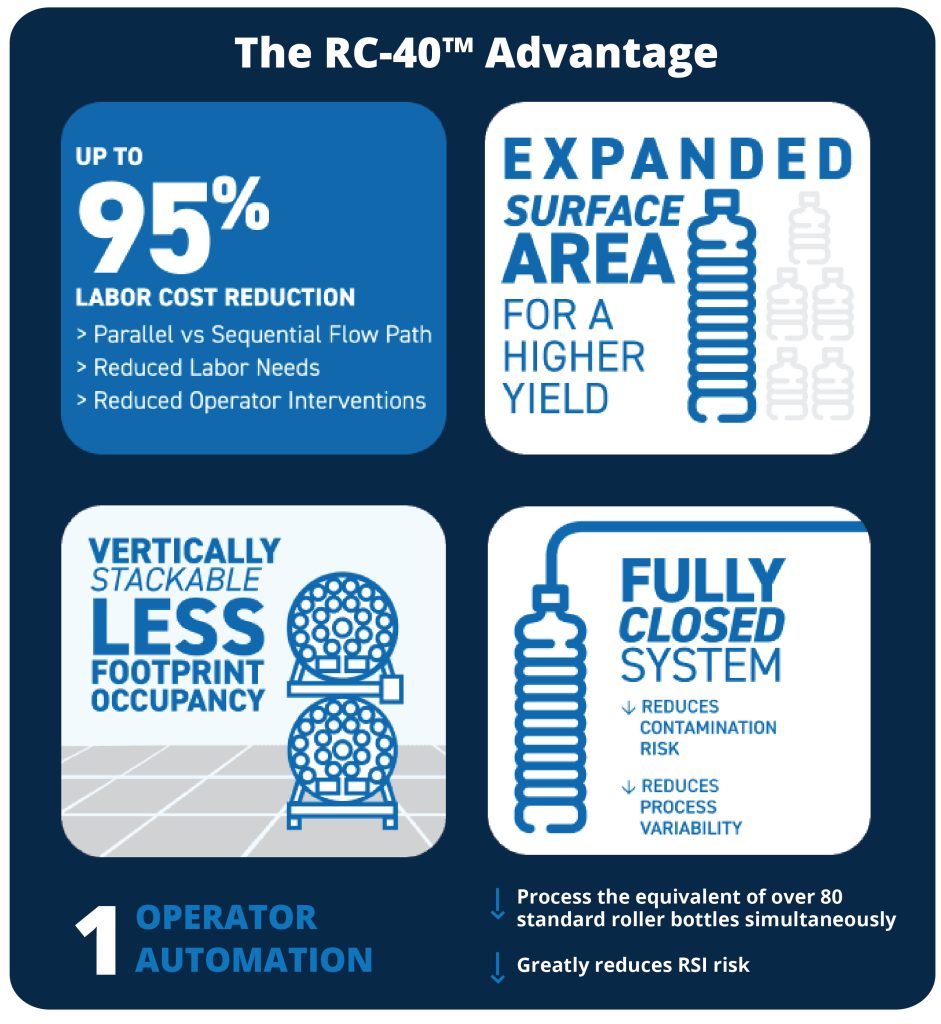
Reduce risk with a closed production process
The RC-40™ solution is a completely aseptic flow path, greatly reducing the risk of contamination and process variation while also yielding more reliable and repeatable results.It eliminates manual transfers and open handling as well as supports Annex 1 and 21 CFR aseptic processing requirements.
Unlock efficiency with a fully automated solution
A single operator can quickly and homogeneously fill 40 5X roller bottles, perform media exchange in 10-15 minutes, and harvest them in just 5-10 minutes—all without opening a single bottle – and the standardized, reproducible processes offerautomated batch records aligned with FDA, EMA, and ICH frameworks.
Reduce labor and facility footprint
The RC-40™ has the potential to reduce your labor costs by up to 95% with its parallel versus sequential flow path, single operator automation, and the reduction of operator interventions.
Increase yield and stability
With expanded surface bottles, you can experience higher yields while retaining your existing production process.
Reduce lab occupancy footprint
This compact system can significantly reduce lab space occupancy allowing you to increase your production without having to invest in facility expansion.
Future-Proofing Adherent Cell Culture
As regulators and clients demand higher quality, faster timelines, and lower contamination risk, organizations relying on manual roller bottle processes face increasing pressure to modernize. Closed-system automation like the RC-40™ bridges the gap—offering a compliant, scalable solution without abandoning validated processes.
Download the GMP Compliance Checklist to benchmark your roller bottle operations and identify opportunities for improvement. Or, contact our technical team to explore how RC‑40 can address your specific compliance and efficiency challenges.
Article Footnotes
- FDA Guidance for Industry: Sterile Drug Products Produced by Aseptic Processing — Current Good Manufacturing Practice: https://www.fda.gov/regulatory-information/search-fda-guidance-documents/sterile-drug-products-produced-aseptic-processing-current-good-manufacturing-practice
- EU GMP Annex 1: Manufacture of Sterile Medicinal Products (Revised, 2023): https://health.ec.europa.eu/system/files/2022-08/20220825_gmp-an1_en_0.pdf
- ICH Q7: Good Manufacturing Practice Guide for Active Pharmaceutical Ingredients: https://www.fda.gov/regulatory-information/search-fda-guidance-documents/guidance-industry-q7a-good-manufacturing-practice-guidance-active-pharmaceutical-ingredients
- Nature Biotechnology: Viral contamination in biologic manufacture and implications for emerging therapies (2020): https://www.nature.com/articles/s41587-020-0507-3
- Diagnostics: Laboratory Automation in Microbiology — Impact on Turnaround Time (2023): https://www.mdpi.com/2075-4418/13/13/2243